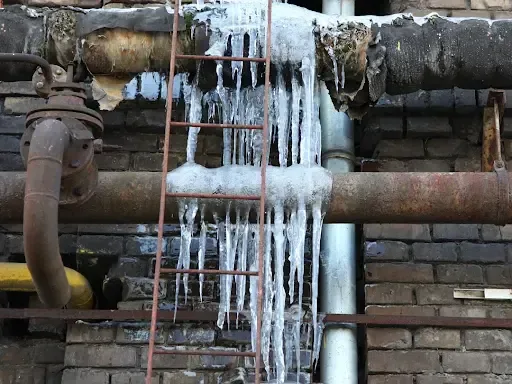
A frozen pipe does not leak while it is frozen. The damage shows up when the pipe warms and the crack it formed starts to flow, which is why a Runnemede homeowner can wake to a quiet house and find a flooded wall hours after the temperature rises.
Key takeaways
- Frozen water expands, cracks the pipe and then flows through the crack when it warms.
- Pipes in attics, garages, crawl spaces and uninsulated exterior walls freeze first in New Jersey cold snaps.
- A faucet that runs slow or not at all in a cold snap is a warning that a pipe is freezing.
- Shut off the main valve at the first sign of a leak, then call for extraction and drying.
- State Farm recorded more than 400 New Jersey claims for frozen pipes or ice dams in one 12 month period.
Why pipes split on the thaw
Water expands when it freezes. The ice plug inside the pipe pushes against the walls, and the pressure that builds between the plug and a closed faucet is what cracks the pipe.
The crack can be tiny. While the ice holds, nothing leaks.
When the temperature rises and the ice melts, water flows through the crack under full pressure, which is why freeze thaw cycles are hard on home plumbing.
Where pipes freeze first
Cold finds the weakest spots in a house. Pipes that run through unheated or poorly insulated spaces are the first to go, and a Runnemede home is no different from any other New Jersey home in this respect.
- Attics with exposed supply pipes
- Garages with a washer hookup or utility sink
- Crawl spaces and the rim of a basement
- Uninsulated exterior walls, especially behind a kitchen sink
- Outdoor spigots and the pipes just inside the wall
Signs that a pipe is freezing
A faucet that trickles or gives no water in a cold snap points to ice. Frost on a visible pipe, a bulge or a pipe that is cold to the touch are other signs.
- Slow flow from one faucet
- Frost on exposed pipe
- Odd gurgling or banging in the pipes
Signs that a pipe has already split
Stains on a ceiling or wall, a sudden drop in water pressure, the sound of running water behind a wall or a rising water meter reading with no one using water.
Reading the Runnemede cold snap
The Runnemede service page covers the cleanup side. The weather side is simple: New Jersey cold snaps freeze pipes in unheated spaces first, and a house with a failed heating system freezes faster than one with a working furnace.
A dead thermostat battery, a tripped furnace switch or an empty oil tank are common causes of a cold house. A quick check of the thermostat before a freeze is one of the cheapest safeguards.
What State Farm claims show
In the 12 months ending August 2023, State Farm recorded more than 400 New Jersey claims for frozen pipes or ice dams, with about $16 million in damage. That is one insurer, one state and one year, but it shows how common cold weather water loss is.
Runnemede is a dense borough of 8,324 residents at the 2020 census. A split pipe in a house on a tight street can reach a neighbor through a shared wall or yard, so a quick response protects more than one home.
A cold snap checklist for the night before
When a hard freeze is forecast, a short routine in the evening can prevent a split pipe. The steps cost nothing and take little time.
- Open the cabinet doors under kitchen and bath sinks
- Let one faucet on an exterior wall drip
- Close the garage door and any attic hatch
- Set the thermostat no lower than normal, even overnight
- Know where the main water shutoff is
- Put a flashlight and a bucket where they are easy to find
First steps when a pipe lets go
The first goal is to stop the water. The second is to keep the damage from spreading while help arrives.
- Close the main water valve and open a faucet to drain the pipes.
- Shut off power to wet areas if the panel is dry and reachable.
- Move furniture, rugs and electronics out of the wet area.
- Photograph the leak, the wet walls and the ceiling.
- Do not heat the frozen section with a flame or torch.
- Call for water extraction and drying right away.
What the cleanup and drying involve
A split pipe in an attic or wall often wets insulation, drywall and framing before the leak is found. The frozen pipe water damage work starts by finding the break, stopping the flow and removing standing water.
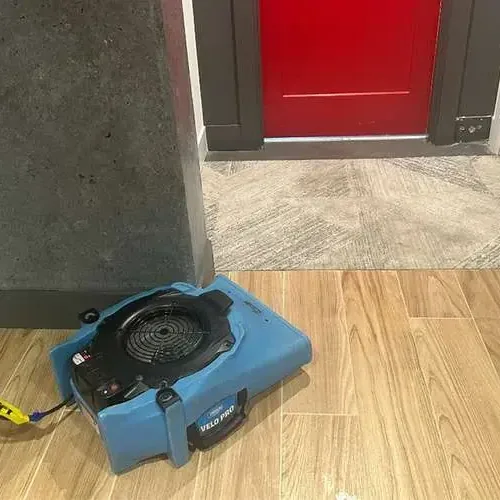
Wet insulation and sagging drywall come out, and cavities are opened so air can reach the framing. Dehumidifiers and air movers run until moisture readings return to normal.
- Pipe break located and the water shut off
- Standing water extracted
- Wet insulation and drywall removed
- Wall and ceiling cavities opened and dried
- Moisture readings logged each visit
Attic leaks
Water that starts in an attic runs along joists and drops through a ceiling light or fan, so the stain may be far from the source.
Garage and exterior wall leaks
A split pipe in a garage wall often wets the slab and the base of the wall, and a kitchen sink pipe in an exterior wall wets the cabinet behind it.
After the repair
Once the pipe is replaced and the walls are dry, a few follow ups reduce the chance of a repeat. The plumber can wrap or reroute the pipe that failed.
Moisture readings a week later confirm the cavity stayed dry, and any stain that returns is worth reporting. The structural drying page explains how the readings are used.
- Insulate or reroute the pipe that failed
- Seal gaps where cold air reaches pipes
- Check the area again after a week
- Keep the repair invoice and moisture log
Preventing a repeat
Most frozen pipe losses are preventable. Insulation, a little heat and a few habits during a cold snap go a long way.
The burst pipe water damage page covers what happens when a crack has already formed, and the same prevention steps apply after repair.
- Insulate pipes in attics, garages and exterior walls
- Open cabinet doors under sinks on cold nights
- Let a faucet drip when a hard freeze is forecast
- Disconnect outdoor hoses and close the inside valve
- Keep the heat on when away, even at a low setting
When the house is empty
A vacant or seasonal home is the worst case. A pipe that thaws while no one is home can run for days, and the damage multiplies.
Neighbors, a caretaker or a leak sensor with an alert can catch it early. Anyone leaving a house for a few days in winter should set the heat and know where the main shutoff is.
Questions
Why did the pipe not leak until it warmed up?
Ice plugs the pipe and holds the water in place. The crack is there, but water cannot flow until the ice melts.
Should a frozen pipe be thawed before it splits?
A slow, safe thaw with a hair dryer or warm towels can help if the pipe has not cracked. Never use a flame, and shut off the main valve if any leak appears.
What temperature is dangerous for pipes?
Pipes in unheated or poorly insulated spaces can freeze in a hard cold snap. A New Jersey plumber has said homes become vulnerable once temperatures fall below 20 degrees.
Does homeowners insurance cover a burst pipe?
A New Jersey insurer has said homeowners insurance typically covers water damage from a burst pipe. The policy and the adjuster decide the details.
How long does it take to dry a wall after a split pipe?
It depends on how much water reached the cavity and the materials. Equipment runs until moisture readings in the wall and framing return to normal.