Structural Drying in Runnemede, NJ
After the standing water is gone, controlled drying pulls stored moisture from framing, subfloors and walls so lingering dampness does not turn into swelling, odor or decay in the walls and floors.
☎ Call (888) 471-9821Plan the dry-out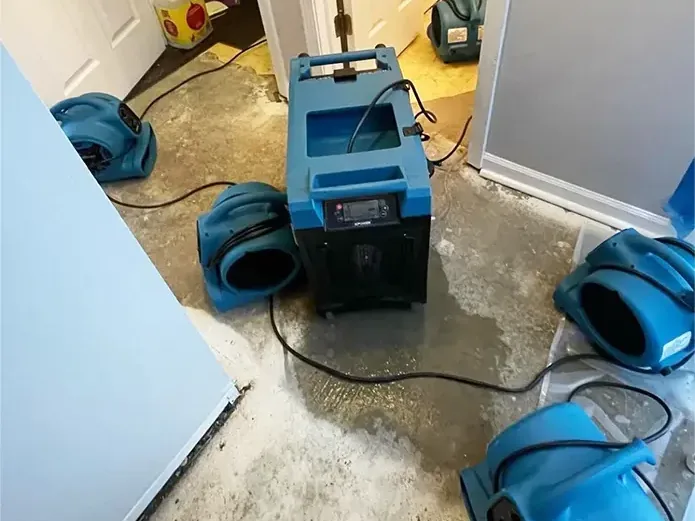
Wet structures hold moisture long after the water is removed. Controlled drying prevents lingering damp by moving air across surfaces and pulling water vapor out of the room, which is far more reliable than opening a window or running a household fan.
How structural drying and dehumidification is handled, step by step
Set
Equipment is placed by moisture map.
Monitor
Readings are logged daily.
Adjust
Machines move as areas dry.
Release
Equipment leaves at dry readings.
How the drying works
- Air movers push dry air across floors and wall cavities to lift moisture off the surface
- Dehumidifiers condense that moisture so the room humidity keeps falling
- Small holes or removed trim let air reach wet cavities behind walls
- Meters track every wet material and show when each one reaches a dry reading
Why readings matter
Visible dryness is misleading. Framing, subfloors and the back of drywall can stay wet while the surface feels fine, so daily readings decide when the equipment can come off.
Preventing lingering damage
Left damp, wet materials can start to grow mold within 24 to 48 hours. Steady drying through that window protects the structure and keeps odors from settling in. Equipment placement is not guesswork. Technicians read each surface, mark the wet areas on a simple map and position air movers so airflow reaches the dampest corners. As areas reach dry readings, machines are moved or removed so power use is kept to what the job needs. Hardwood, plaster and thick framing hold water longer than drywall, so those areas stay on the schedule after the rest of the room is done.
First steps for structural drying and dehumidification
Keep equipment running
Leave machines on and closed doors shut.
Avoid turning down
Do not lower the heat during drying.
Empty collection tanks
Follow the crew's instructions on drain hoses.
Expect daily checks
Meters are read at every visit.
What does structural drying and dehumidification cost in Runnemede, NJ?
Structural drying usually costs $2,500 to $5,000 for a basement or several rooms. One or two rooms cost less, and dense materials that need Class 4 drying cost more. A written scope follows inspection.
Ranges are typical, not a quote: the category of water, square footage, material class and how fast drying started move the number most. Try the water damage cost calculator for a closer range, and check your own policy for what it covers.
Structural drying and dehumidification across Runnemede and nearby towns
Structural drying crews work across the borough, including homes near the North Black Horse Pike and the Route 168 and Route 41 corridor, in ZIP 08078. Crews also reach apartments and shops.
The same service nearby: structural drying and dehumidification in Deptford, Bellmawr, Gloucester City.
All water services for this town › Every town covered ›Floors and walls still damp? Drying crews can be scheduled at any hour.
☎ Call (888) 471-9821Plan the drying setupRelated water damage services nearby
Structural Drying and Dehumidification questions
Q01How long does structural drying take?
Q02Why are fans not enough?
Q03Can the equipment stay on all night?
Q04Will drying raise the electric bill?
Q05How do crews know when it is done?
Walls still damp after the cleanup? Dry them
Describe what got wet and how long ago, and the crew will map the moisture and place equipment where it dries fastest.
☎ Call (888) 471-9821Schedule structural drying