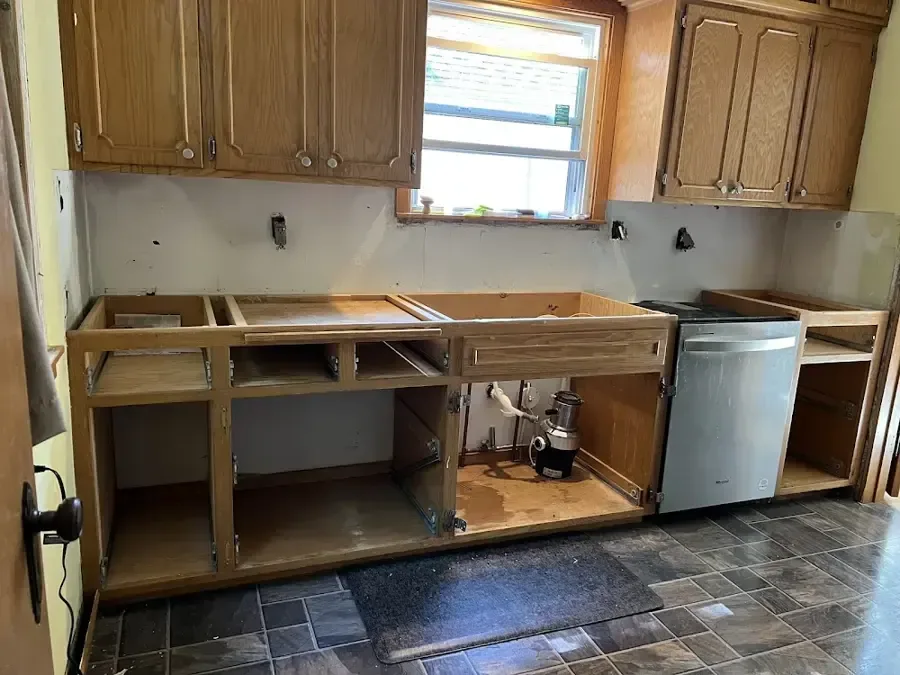
A burst pipe announces itself. A slow appliance leak does not, and in a Woodbury home where one person lives alone or the house sits empty during the workday, the water can run for days before anyone sees it. By then the damage is under the floor, not on top of it.
Key takeaways
- Slow leaks hide under flooring and behind cabinets, so the visible puddle is rarely the full problem.
- A water bill that climbs without a change in habits is an early clue worth acting on.
- Shut off the appliance supply valve first, then dry the area before the floor warps.
- Long running leaks can complicate an insurance claim, so notes and photos matter.
- Drying equipment removes moisture from subfloors and cabinet bases that wiping cannot reach.
Why a slow leak is worse than a sudden one
A sudden break is loud, obvious and stopped quickly. A slow leak wets the same spot a little at a time, and the material around it soaks it up like a sponge.
About 34.2 percent of Woodbury households are made up of one person living alone, and with a dense small lot layout of 4,532 housing units, a leak in one home can reach a neighbor through a shared wall or ceiling. Empty hours make a slow leak go unnoticed.
Where the water goes
Water finds the lowest and most absorbent path. In a kitchen or laundry it moves under the appliance, along the subfloor and into the cabinet base before it ever shows on the surface.
- Under dishwashers and refrigerators with ice makers
- Behind washing machines at the supply hose connection
- Beneath sinks where a drain or trap weeps slowly
- Inside the wall behind a supply valve
Signs on the surface
Look for a floor that feels soft or cups at the edges, a baseboard that stains or lifts, and paint that bubbles near the appliance.
- A musty smell near the appliance
- Warped laminate or lifting vinyl
- Cabinet bases that swell or darken
Signs from the water bill
The City of Woodbury bills water and sewer itself through Public Works, with bills going out quarterly on January 15, April 15, July 15 and October 15. A bill that jumps with no change in habits can point to a hidden leak.
Appliance by appliance
Each appliance fails in a different way, and knowing the pattern speeds up finding the source.
Dishwashers
The door gasket, the supply fitting and the drain hose are the usual weak spots. A leak often shows first as a stain at the front toe kick or a swollen cabinet side.
- Check under the sink for a weeping fitting
- Look for rust at the bottom of the tub
Washing machines
The two rubber supply hoses carry full pressure whenever the valves are open. A bulge, a crack or a rust stain at the coupling is a warning sign.
- Replace rubber hoses with braided hoses
- Close the valves when away for several days
Refrigerators with ice makers
The thin plastic tube feeding the ice maker can crack or loosen. The leak is small, but it can run for weeks behind the unit.
- Pull the unit out and look at the floor behind it
- Feel the back panel for damp insulation
What to do the moment a leak is found
The order of steps keeps the damage from growing while the scope is still small. The appliance leak water damage page explains how supply hoses and fittings fail, and the same steps apply across the Woodbury service area.
- Close the shutoff valve at the wall or the main valve.
- Unplug the appliance if the outlet and floor are dry.
- Mop or vacuum visible water and lift rugs and boxes off the floor.
- Photograph the area, the appliance and any stains.
- Open cabinet doors and run a fan while arrangements for drying are made.
How drying reaches the hidden water
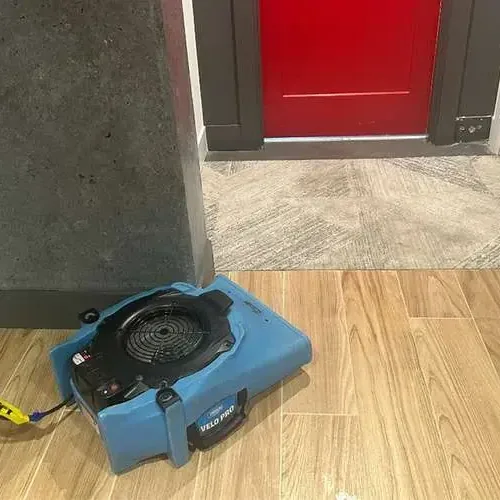
Wiping the floor removes the surface only. Water inside the subfloor, cabinet base and wall cavity needs controlled air movement and low humidity to leave.
That is the point of structural drying. Moisture meters find the wet spots, and equipment runs until readings match unaffected areas.
- Moisture mapping of the floor, cabinet base and wall
- Air movers aimed at the subfloor and under cabinets
- Dehumidifiers that keep the room dry as moisture comes out
- Toe kick panels removed to let air reach the cavity
Shared walls and close neighbors
In a dense city, a leak does not always stay inside one home. Water can travel along a floor joist or a shared wall and show up as a stain next door, and neighbors who talk early find the source sooner.
Property managers and owners of multi unit buildings often shut off the water at the building level and call for drying before the dispute over who pays begins. Photos taken at the first sign protect everyone in the building.
When the leak ran for a long time
The longer water sits, the more material is affected. Flooring that has cupped or delaminated usually cannot be saved, and a cabinet base that stayed wet may need replacement.
Insurance language matters here. Many policies treat a sudden event differently from a long seepage, so a clear record of when the leak was discovered helps the claim.
- Write down the date and time the leak was found
- Keep the failed hose or part if it can be removed
- Photograph the damage before drying begins
- Save receipts for drying and repairs
Preventing the next one
Most appliance leaks trace back to a few parts. Rubber washer hoses, plastic ice maker tubes and old shutoff valves all wear out.
A short walk around the kitchen and laundry every few months, with a hand under the dishwasher and a look behind the washer, catches many problems early. Braided steel hoses and leak sensors add another layer for homes that sit empty.
Questions
How can a slow appliance leak be detected early?
Look for soft flooring, a musty smell, swollen cabinet bases and a water bill that rises with no change in use. Checking under and behind appliances every few months catches many leaks.
Does homeowners insurance cover a slow leak?
Coverage varies by policy. Sudden events are often treated differently from long seepage, so the date the leak was found and a clear record of the damage matter.
Can a wet kitchen floor be dried without removing it?
Sometimes. Hardwood or laminate caught early can often be dried in place, while flooring that cupped or separated usually has to come up so the subfloor can dry.
What does the City of Woodbury handle in a leak like this?
Woodbury Public Works handles water and sewer billing and tie in permits. A leak inside the house, such as an appliance fault, is the owner's to stop and clean up.
Who should be called after a washing machine hose bursts?
Shut off the water, then call a water damage team to extract and dry. A plumber can replace the hose or valve once the area is safe.