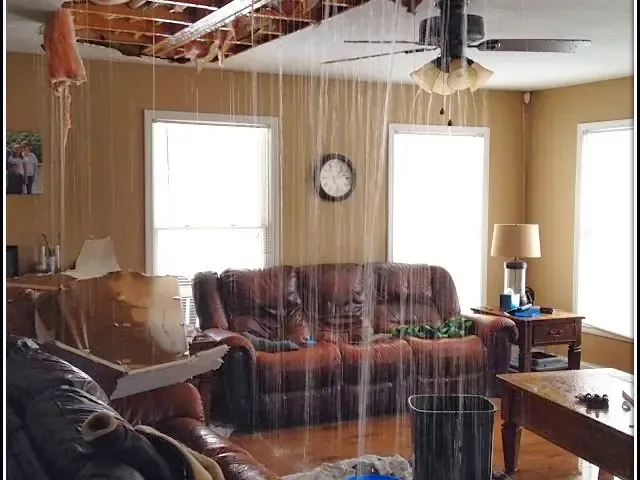
A storm that opens a roof sends water into the attic first, then into the ceiling below. On September 1, 2021, an EF3 tornado from the remnants of Hurricane Ida damaged more than 100 homes in Deptford Township, and the same chain of events plays out after any storm that lifts shingles.
Key takeaways
- Water from a storm opened roof soaks insulation first, then drywall, then framing.
- A sagging or stained ceiling can hold water that has to be released before it falls.
- The roof must be covered or tarped before interior work starts.
- Wet insulation and damaged drywall come out, and the cavity is dried with equipment and readings.
- Photos taken before cleanup support the insurance claim.
What a storm does to a roof
Wind lifts shingles, tears flashing and can strip the roof deck. Even a small opening lets rain into the attic, and wind driven rain can travel a long way from where it entered.
The EF3 tornado that struck Deptford Township on September 1, 2021 had winds up to 150 mph, and it damaged more than 100 homes. Storms of that size are rare, but ordinary thunderstorms and strong winds can also lift shingles and open a roof.
How water moves into the house
Water follows gravity and the paths of least resistance. It runs down rafters, soaks attic insulation and spreads across the ceiling drywall before it shows on the room side.
- Drips at a light fixture or ceiling fan
- A brown ring that grows after each rain
- Paint that bubbles or peels on the ceiling
- A ceiling that sags or bulges
- Dripping inside a wall below the roof edge
In the attic
Insulation holds water like a sponge. A wet batt or blown cellulose layer keeps the ceiling wet long after the rain ends, and it stops working as insulation.
In the ceiling and walls
Drywall absorbs water, loses strength and can fall when saturated. Water that runs down a wall cavity wets the framing and the wall below.
The first steps after a roof opens
Order matters. Protecting people and stopping more water entering come before cleanup.
- Cover the roof opening with a tarp or have a roofer do so.
- Shut off power to rooms with a wet ceiling, especially if lights are on that circuit.
- Move furniture and electronics out of the room.
- Place a bucket under drips and poke a small hole in a bulging ceiling to release water.
- Photograph the roof, attic and ceiling before moving anything.
- Contact the insurance company to open a claim.
Checking the attic after a storm
An attic visit after a storm can reveal damage before it reaches the ceiling. The visit should be made carefully, in daylight and with a flashlight.
Wet insulation, dark stains on the roof deck and daylight showing through the boards all point to an opening. The photos support the claim and help the roofer find the spot.
- Damp or compressed insulation
- Dark stains on rafters or the roof deck
- Daylight visible through the roof
- Water dripping from a nail or vent pipe
Questions for the roofer and the drying crew
Roof repair and interior drying are separate jobs, and they work best when they are coordinated. The roofer seals the opening, and the drying crew removes wet material and dries the structure.
Asking each of them for a written scope keeps the claim organized and avoids gaps. The drying crew should explain which materials are coming out and how moisture will be tracked.
- Is the roof sealed or only tarped for now
- Which ceilings and walls are coming down
- How will the attic be dried
- What readings show the job is finished
- Who documents the work for the adjuster
What comes down and what is dried
A roof leak water damage job begins with the roof sealed. Then the interior is opened up so the water has a way out.
Wet insulation is removed and bagged. Drywall that is stained, sagging or soft usually comes down, and the cut edge is checked with a moisture meter to find where the wet material ends.
- Wet attic insulation removed
- Sagging or soft ceiling drywall taken down
- Standing water extracted from the floor and attic
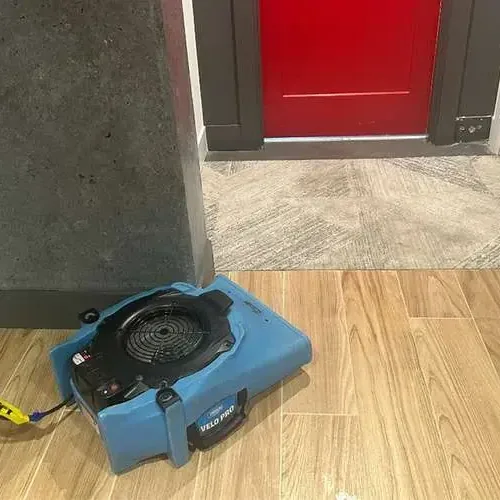
- Framing and subfloor dried with air movers
- Dehumidifiers set up to control the humidity
Drywall
Water stained drywall can sometimes be dried if it is firm and caught early. Sagging or soft drywall almost always has to be replaced.
Insulation
Wet insulation seldom recovers, and replacement is part of the repair.
Protecting the house until the roof is fixed
Roof repairs can wait for materials and schedules, but interior protection cannot. A tarp, a few buckets and some plastic sheeting limit the loss.
The structural drying crew can begin once the opening is covered. Drying equipment in a house with an open roof just pulls in more damp air.
- A tarp secured over the opening
- Plastic sheeting over furniture and floors
- Buckets under active drips
- Photos of every temporary measure
Ceiling repair after drying
Once readings are normal, the ceiling can be patched and painted. A ceiling leak water damage repair is quick when the source is found and the structure is dry.
Painting too early can trap moisture and hide a leak that is still active. A stain that reappears after a dry spell points to a leak that has not been fixed.
The claim and the paperwork
Storm damage claims move best with clear records. Photos of the roof, the attic and the ceiling before cleanup give the adjuster a view of the loss.
A written scope of work from the roofer and the drying crew, plus receipts for temporary repairs, supports reimbursement. Many policies expect owners to take reasonable steps to prevent further damage.
- Dated photos of the roof and ceiling
- Receipts for tarps and temporary repairs
- Written scope from the roofer and drying crew
- A list of damaged contents
Checking the roof before the next storm
A yearly look at the roof catches problems before they leak. Missing shingles, cracked flashing and clogged gutters are the usual causes.
Homeowners in Deptford Township can ask a roofer to inspect after any severe storm, even if no stain appears inside. Water often takes weeks to show up as a ceiling mark.
Questions
Can a sagging ceiling be saved?
Rarely. A ceiling that sags is holding water and has lost strength. It is usually opened to release the water and then replaced.
Should a bulging ceiling be popped?
A small hole at the lowest point of a bulge can release trapped water in a controlled way. Stay clear of the area below, and turn off power to the room first.
How long can a roof leak go before damage spreads?
Wet insulation and drywall start to fail quickly, and framing can be affected within days. The sooner the roof is covered and the water removed, the smaller the repair.
Does homeowners insurance cover a storm opened roof?
Wind and storm damage is often covered, though the policy and the adjuster decide. Temporary repairs to stop further water are usually expected.
When is it safe to repaint a ceiling?
After moisture readings are normal and the leak is repaired. Painting over damp drywall can trap moisture and cause the stain to return.