A sump pit that fills to the rim during a storm is one of the most common ways water gets into Deptford Township homes that have a lower level. The cause is either a pump that quit or a pit that simply could not keep up, and the cleanup depends on which one it was.
Key takeaways
- A stalled pump and an overwhelmed pump look the same on the floor but have different causes.
- Unplug the pump and keep hands away from the pit until the power situation is clear.
- Water that rose from the pit is usually groundwater and storm runoff, so it is treated as dirty, not clean.
- Extraction comes first, then wet materials are removed and the slab and walls are dried to readings.
- A pump check before storm season is cheaper than a cleanup after one.
Stalled pump or overwhelmed pit
The first question after a sump overflow is why the pit filled. The answer shapes the cleanup and the repair that follows.
A pump that stopped working
A power outage during a storm is the classic cause, since the pump sits idle exactly when water arrives. A float switch that sticks, a dead motor or a clogged intake produces the same result.
- Tripped breaker or unplugged cord
- Float jammed against the side of the pit
- Discharge pipe frozen or blocked outside
- Check valve stuck so water runs back into the pit
A pump that could not keep up
Some pumps run the whole storm and still lose. When groundwater rises faster than the pump can move it, the pit overflows even though everything works as built.
- Pump rated too small for the inflow
- Discharge pipe discharging too close to the foundation
- A single pump with no backup during a long storm
Why the creeks matter here
Deptford Township is crossed by Almonesson Creek, which feeds Big Timber Creek, and Mantua Creek runs through developed parts of the township. In heavy rain these waterways and the ground around them fill up, which raises the groundwater a sump has to handle.
The township counted 12,361 housing units in 2010, and any one of them with a pit is relying on a single machine during storms. That is a lot of homes depending on one motor and one float.
Safe first steps at the pit
Electricity and water are a bad mix in a basement, so the early steps are about safety before cleanup.
- Check whether the basement floor is wet near outlets or the panel before walking in.
- Unplug the pump only if the cord and outlet are dry.
- Shut off power to the level at the panel if the panel is dry and reachable.
- Do not reach into the pit while the pump is plugged in.
- Photograph the pit, the pump label and the waterline before anything is moved.
Mistakes to avoid after an overflow
The hours after an overflow are stressful, and a few common reactions make the loss bigger.
- Turning the pump back on without checking the cord and outlet
- Leaving wet boxes and cardboard on the floor
- Running a household vacuum on standing water
- Closing the pit lid without checking for debris
- Assuming the floor is dry because the surface looks clear
Why the lid and cover matter
A sealed pit cover keeps odors and humidity in the pit, but it should never hide a pump that is not running. Lifting the lid for a look, with the power off, is part of every check.
Why the slab needs a second look
A concrete slab can feel dry while holding moisture below the surface. Readings, not touch, decide when drying is finished.
What cleanup looks like after an overflow
Water from a pit is rarely clean. It carries soil, silt and whatever was on the floor, and it often sits for hours before anyone sees it.
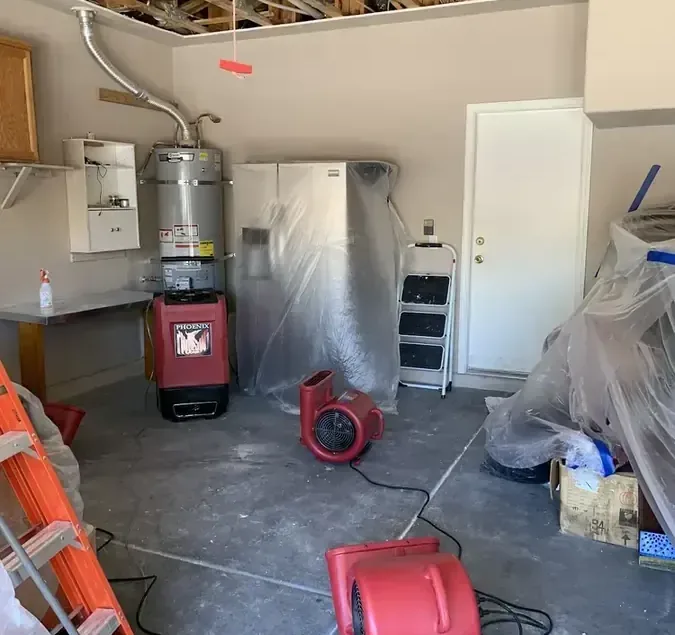
The sump pump failure cleanup work follows a set order.
- Standing water extracted with pumps and wet vacuums
- Wet carpet, pad and stored cardboard removed
- Lower drywall and baseboards cut back where they wicked water
- Surfaces cleaned and treated before drying starts
- Air movers and dehumidifiers set and monitored
Extraction first
The water extraction step pulls the volume off the floor before anything else, because every hour of standing water spreads moisture into more materials.
Then drying to readings
Equipment stays until moisture readings on the slab, framing and walls match dry reference spots. A floor that feels dry can still hold water inside the concrete.
Fixing the cause before the next storm
Cleaning up without addressing the pump just sets up the next overflow. A plumber or sump specialist can test the pump, replace a failed float and check the discharge path.
Many homeowners add a battery backup or a second pump after a loss, so a power outage does not leave the pit unprotected. The same logic applies to an alarm that sounds when the water rises.
- Test the pump by pouring water into the pit until the float lifts
- Clear debris from the pit and the discharge pipe
- Confirm the discharge ends well away from the foundation
- Consider a battery backup or a second pump
- Mark the main panel and shutoff before storm season
What the claim record should include
An overflow claim is stronger with a clear story. Insurers ask what caused the water, when it was found and what was damaged.
A homeowner who photographs the pit and the pump label, keeps the failed part and records the weather and the power outage has most of what the adjuster asks for.
- Photos of the pit, pump and waterline
- The make and model of the pump
- The date the power went out and came back
- A list of items moved or discarded
When the water is more than groundwater
If a floor drain or toilet is also bubbling, the problem may be a sewer backup rather than a pit overflow. That water is treated differently, and the basement flooding cleanup page explains the steps for a wider loss.
A quick check helps. Clear, cool groundwater coming from the pit points to the pump.
Cloudy water with an odor coming from a drain points to the sewer.
Questions
Why did the sump pump fail during the storm?
The usual causes are a power outage, a stuck float, a clogged intake or a frozen or blocked discharge pipe. A pump can also be too small for the inflow and run nonstop without keeping up.
Is sump pit water safe to touch?
Not without precautions. It can carry soil, bacteria and chemicals from the floor, so gloves, boots and a mask are the minimum while cleanup is under way.
Does homeowners insurance cover a sump pump overflow?
Coverage for sump pump overflow often depends on an endorsement and varies by policy. The claim goes better when photos and a record of the pump are kept, and the insurer can say what applies.
Should the pump be replaced after an overflow?
If the cause was a dead motor, a failed float or an undersized unit, a repair or replacement is worth doing before the next storm. A pump that simply lost power may only need a backup.
How soon does the water need to come out?
As soon as it is safe. The longer the water sits, the more drywall, flooring and framing it reaches, and the larger the repair becomes.