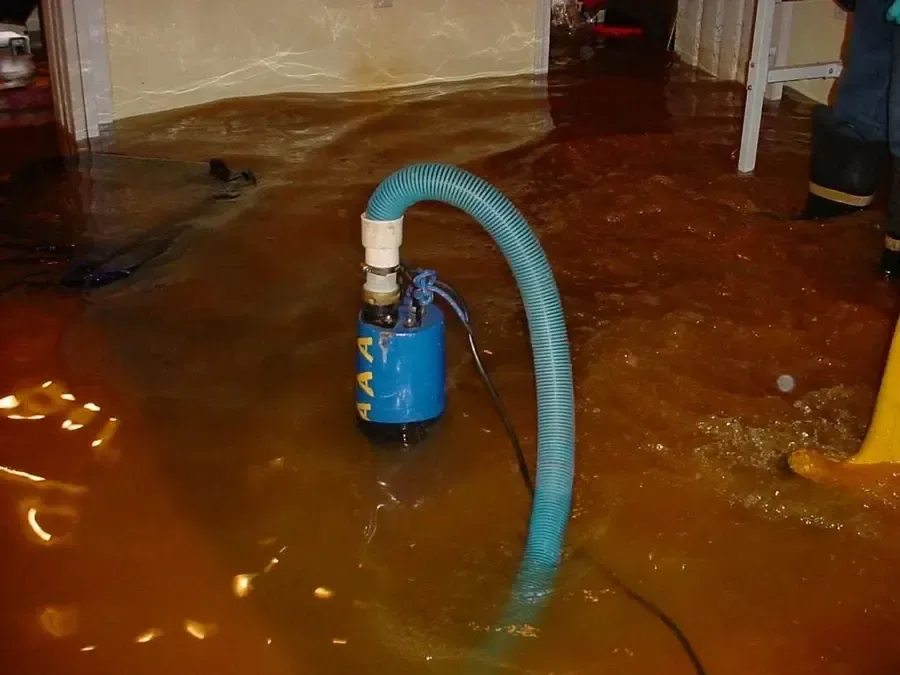
When heavy rain sends water into a basement in Deptford Township, the first few decisions decide how much of the lower level can be saved. Power, standing water and wet drywall each call for a different response, and the order of those responses matters as much as the speed.
Key takeaways
- Keep out of standing water until the power to that level is off, because water and live outlets are the first danger.
- Photograph the waterline and the damaged items before anything is moved, since insurers ask for that record later.
- Standing water is pumped out first, then wet carpet, pad and the bottom of the drywall come out.
- Block walls and the slab need controlled drying with air movers and dehumidifiers, not just open windows.
- Water that came from a creek, a storm drain or a floor drain is treated as contaminated, not as clean rain.
Why local basements take on water in heavy rain
Deptford Township sits on a web of small waterways. Big Timber Creek is tidal through its main stream and drains to the Delaware River, Almonesson Creek feeds it, and Mantua Creek passes through the developed parts of the township on its way to Paulsboro.
The creek lies in the Inner Coastal Plain, a wedge of mostly unconsolidated sediments. That is a description of the ground in general, not a prediction for any single house, but it explains why rain can move through the ground and press on a foundation.
- Window wells that fill faster than they drain
- The joint where the floor slab meets the wall
- Floor drains that back up when the storm system is full
- A sump pit that overflows or a pump that stops
- Hairline cracks in block or poured walls
Water that comes in from outside
Rain, runoff and a high water table push water through the wall and floor joint. This water often carries soil and debris, so it is handled as dirty water.
Water that comes up from the drains
A floor drain or toilet that bubbles during a storm points to a sewer or drain problem. That is a sewage question, and the sewage backup cleanup page explains how it differs.
What to do right away
The urge is to start carrying things upstairs. Safety comes before salvage, and a short order of steps keeps a bad situation from getting worse.
- Turn off power to the basement at the panel only if the panel is dry and reachable without wading.
- Leave the area if water is near outlets, a furnace or a water heater and the power cannot be shut off safely.
- Photograph the waterline on the walls, the floor and each damaged item.
- Lift furniture legs onto blocks or foil and move small valuables upstairs.
- Keep children and pets out of the water, since it may carry sewage or chemicals.
- Contact the insurance company to open a claim before cleanup begins.
What gets pumped and removed first
Extraction comes before everything else. Water left standing keeps soaking into drywall, wood framing and stored boxes, and every day it sits adds to the list of materials that have to be thrown away.
- Standing water pulled with pumps and wet vacuums
- Carpet and pad lifted and discarded when the water was dirty
- Drywall cut back above the waterline so the wall cavity can dry
- Wet insulation and baseboards removed
Extraction
Truck mounted or portable units pull the water out, and the water extraction crew works from the deepest spot toward the stairs. Squeegees and wet vacuums finish the floor.
Materials that come out
Porous materials that sat in dirty water rarely recover. Drywall is usually cut a few inches above the waterline, and the cut line is checked with a moisture meter so the wall is not opened more than needed.
Drying block walls and the slab
A basement can look dry long before it is. Block walls hold water in their hollow cores, and a concrete slab releases moisture slowly for days after the surface wipes clean.
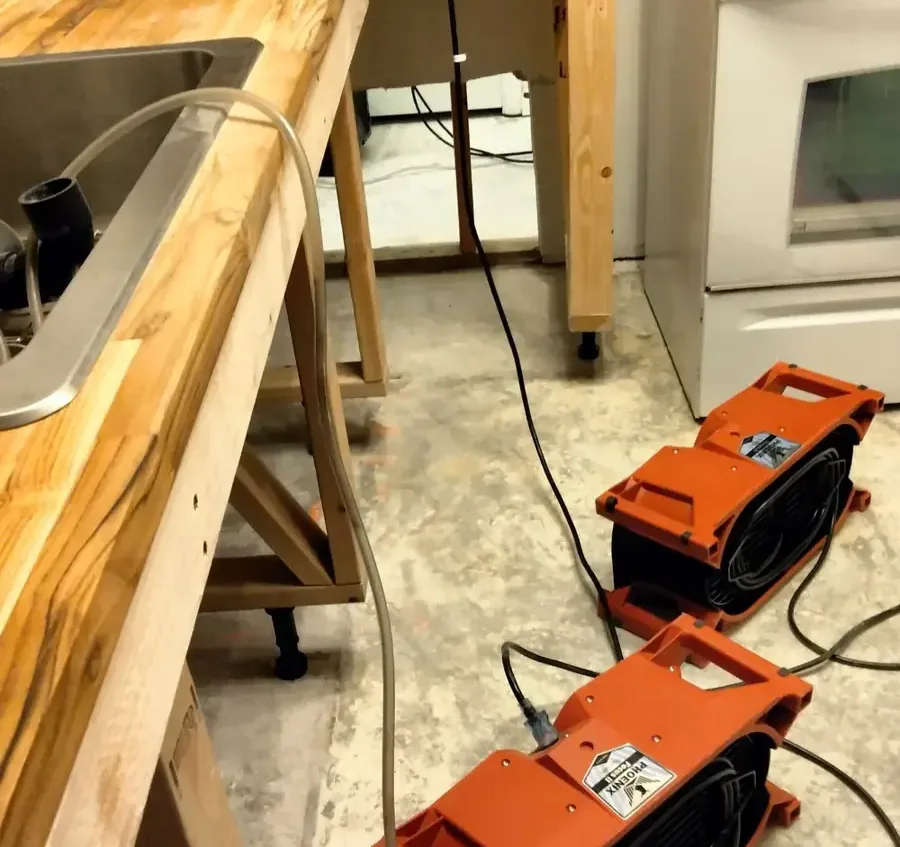
Drying equipment runs continuously with the doors closed, which keeps humidity down and pushes moisture out of the masonry. The structural drying process is measured, not guessed.
- Air movers pushed along the base of each wall
- Dehumidifiers sized to the volume of the space
- Moisture readings logged on walls, framing and slab
- Equipment removed only when readings match dry reference spots
Mistakes that make a flooded basement worse
Well meant shortcuts often add to the loss. A few habits are worth avoiding until the structure has been checked.
A household vacuum is not built for water and can shock the person holding it. Heat turned up to dry things quickly can drive moisture deeper into the framing and speed the spread of odors.
- Using a household vacuum on standing water
- Walking through water to reach the panel
- Leaving wet carpet and pad in place for days
- Painting or sealing walls that have not been dried
- Throwing away damaged items before photographing them
Flash flood warnings and the northern end of the township
A Gloucester County flash flood warning has reported flooded roadways across Woodbury, Woodbury Heights, West Deptford and northern Deptford. When a warning like that goes out, a basement has little time to prepare.
A simple routine before a storm helps. Clear the window wells, test the sump, move stored items off the floor and know where the main panel and water shutoff sit.
The sump pump failure cleanup page covers what to do when the pit itself is the weak point.
A short checklist for the next storm
Homeowners who have been through one flooded basement tend to prepare for the next. The list is short and costs little.
- Know where the main panel, the water shutoff and the sump are
- Keep stored items on shelves or plastic bins off the floor
- Clear leaves and debris from gutters, window wells and yard drains
- Keep a phone charged and the insurance details in one place
- Check the basement flooding cleanup page for how a loss is scoped
What to document for a claim
A basement loss generates a lot of paperwork, and the claim goes more smoothly when the record starts on day one. Photos, a short list of damaged items and the dates of each step carry the most weight.
Keep damaged items until the adjuster has seen them or approved disposal. Receipts for equipment, cleanup and temporary housing belong in the same folder.
When storm water is part of the picture, the storm and flood cleanup page explains how larger losses are handled.
- Dated photos and video of each room
- A written list of damaged items with approximate values
- Notes on when the water was first noticed
- Copies of every receipt tied to the loss
Questions
Is it safe to go into a flooded basement?
Only after the power to that level is confirmed off. If water reaches outlets, a furnace or a panel that cannot be turned off dry, the safer choice is to stay out and have the utility or an electrician make it safe first.
Should the carpet be saved after a basement flood?
Carpet that sat in clean water for a short time can sometimes be dried. Carpet that sat in creek, storm drain or sewage water is normally removed with the pad, because it cannot be cleaned to a safe level.
How long does a flooded basement take to dry?
It depends on how much water came in and what the walls are built from. Block walls and concrete slabs take longer than framed walls, and the equipment stays until moisture readings return to normal.
Does the township MUA clear a flooded basement?
The township MUA supplies water and sewer service, but a flooded interior is the property owner's cleanup. The utility is the right contact if a street main or sewer problem is suspected.
Can wet drywall just be left to dry?
Drywall that stayed wet usually swells, stains and holds moisture against the framing. Cutting it back above the waterline lets the cavity dry and avoids a bigger repair later.