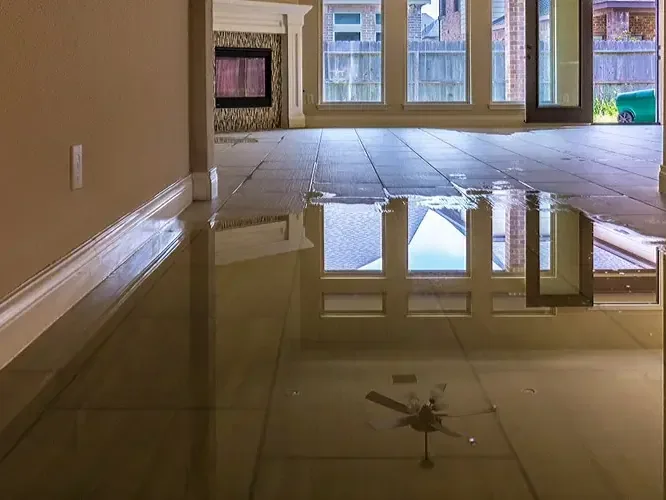
Big Timber Creek runs through Bellmawr, and the borough's storm sewers carry heavy rain toward it. When a storm overwhelms a drain or a window well, the water that enters a home is not clean, and the cleanup has to treat it that way.
Key takeaways
- Rain that stays clean, creek water and storm sewer water are three different problems with different cleanup rules.
- Photograph the waterline and shut off power to wet areas before moving anything.
- Porous materials soaked by storm water, such as carpet, pad and lower drywall, are normally removed.
- Extraction and drying equipment work together, and readings tell when the structure is dry.
- Borough crews handle the sewers and mains, while the inside of the house is the owner's responsibility.
What is different about storm water
Storm water picks up soil, oil, pet waste and debris as it runs across yards and streets. By the time it reaches a home it can carry bacteria that clean rain does not.
That is why cleanup after a storm is treated more carefully than a simple appliance leak. The category of water decides what can be dried and what has to go.
- Clean rain through a roof leak is the least contaminated
- Creek or runoff water carries soil and bacteria
- Storm sewer or drain backup can contain sewage
- Standing water that sat for days is treated as contaminated
The creek, the park and the borough drains
Big Timber Creek runs through the borough, and neighborhoods such as Bellmawr Park and the Creek Road area sit close to its watershed. The Bellmawr service area is served by a Sewer and Water division that services wastewater and storm sewers for the borough, and the sewer division is on call 24 hours a day for emergency backups.
A storm drain that fills can send water back toward homes, and a window well or door threshold can let it in. No flood zone claim is made here.
What matters is that heavy rain moves water fast, and a home needs a plan for when it gets inside.
The first steps after storm water gets in
Safety comes first, and speed follows. A calm sequence keeps people safe and protects the claim.
- Stay out of the water if outlets, a furnace or the panel are wet.
- Turn off power to the affected area if it can be done from dry ground.
- Photograph the waterline, damaged items and the source of entry.
- Move small valuables and papers to a dry spot.
- Wear boots, gloves and a mask for any contact with the water.
- Report the loss to the insurance company before cleanup begins.
Mistakes that make storm water cleanup harder
Several quick reactions turn a manageable loss into a larger one. The Bellmawr water extraction page describes the standard order of work, and it starts with safety.
- Walking through water that may touch outlets or a furnace
- Running a household vacuum on standing water
- Leaving carpet and pad in place for days
- Mixing bleach with other cleaners
- Skipping the photographs before cleanup starts
What extraction and removal look like
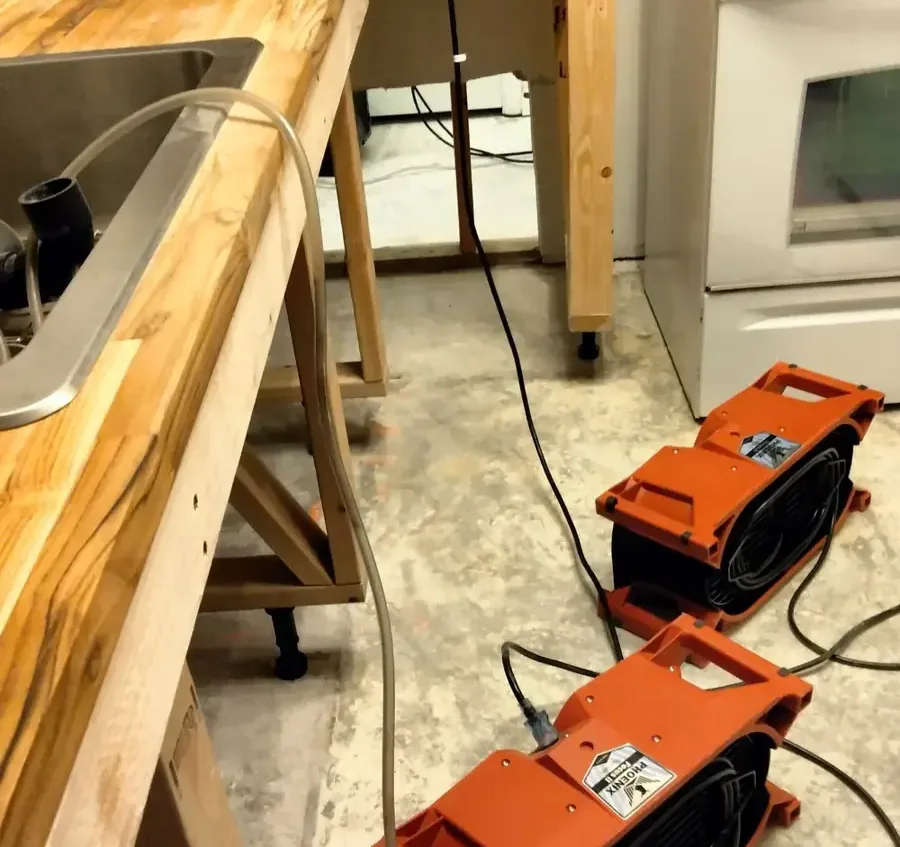
The first job is getting the water out. The water extraction crew uses pumps and wet vacuums to clear standing water, working from the deepest point to the exit.
Once the volume is gone, wet materials are sorted into what can dry in place and what cannot. Storm water usually pushes more materials into the second group.
- Carpet and pad lifted and discarded
- Baseboards and lower drywall cut back
- Wet insulation removed from the cavity
- Hard surfaces cleaned and treated before drying
Materials that can often dry in place
Solid wood, tile, concrete and sealed surfaces can often be cleaned and dried without replacement.
Materials that usually cannot
Drywall, insulation, carpet pad and particle board wick storm water and rarely dry clean.
Drying the structure after a storm
Water that has left the floor is still in the walls, the subfloor and the framing. Air movers and dehumidifiers pull that moisture out while meters track progress.
The storm and flood cleanup approach pairs extraction with measured drying so the repair can start on a dry structure.
- Moisture meters check walls and framing
- Dehumidifiers lower the room humidity
- Air movers keep air moving across wet surfaces
- Equipment comes out only when readings are normal
Getting ready before the next storm
Borough residents cannot control the rain, but a short routine reduces the damage when water does arrive.
- Clear leaves from gutters, downspouts and yard drains
- Make sure downspouts discharge away from the foundation
- Keep stored items on shelves rather than the floor
- Know where the main electrical panel and water shutoff are
- Keep photos of the home and its contents in a cloud folder
- Save the borough sewer division contact in the phone
After the water is gone
Once the structure reads dry, the repair work can start. Drywall, flooring and trim go back in, and a final walk through checks that nothing is still damp behind a baseboard or under a cabinet.
Records matter at this stage too. A folder with photos, moisture logs, receipts and the dates of each step makes the claim easier to close, and it helps if the same storm brings water back later.
- Ask for the moisture readings at the end of drying
- Keep every invoice and the equipment log
- Check baseboards and cabinets again after a week
- Report any new staining or odor right away
Who handles what
A flooded home involves several parties. The Bellmawr Water Department serves an estimated 8,144 people and the sewer division handles the borough's wastewater and storm sewers.
Those crews deal with mains and street drains.
The inside of the house is the owner's job. That means the cleanup, the drying and the claim all start with the homeowner, and the borough should be contacted if a street drain or main seems to be the source.
Questions
Is storm water in a house dangerous?
It can be. Storm water often carries bacteria, soil and chemicals, so contact should be limited and protective gear worn until the area is cleaned and treated.
What should be thrown away after storm water gets in?
Carpet, pad, insulation and drywall that soaked up the water are normally removed. Hard surfaces such as tile and concrete can usually be cleaned and dried.
Does the borough clean up water inside a home?
No. The sewer division handles the sewers, storm drains and mains. The cleanup inside the house is up to the owner and the insurance company.
How can a homeowner tell if it is a sewer backup?
Cloudy water with an odor coming from a drain or toilet points to the sewer. In that case the borough sewer division should be contacted and the cleanup treated as a sewage loss.
How long does drying take after a storm?
It depends on the depth and the materials. Dense materials take longer, and the equipment stays until moisture readings return to normal.